Book Review: Let a Sleeping Witch Lie by Elizabeth Walter
Genre: Horror
Age: Adult
Format: Paperback
I really wanted to like this. A little-known, unsung Welsh writer from my neck of the woods? I couldn’t wait to get stuck in, but, unfortunately, I can’t give this a positive review.
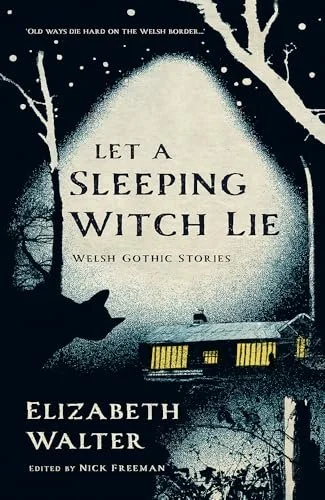
Let A Sleeping Witch Lie is a collection of short stories by Elizabeth Walter, collected and edited by Nick Freeman. I know a lot of readers tend to skip introductions, but Freeman’s introduction to me proved why they are worth reading. It put Walter’s work in context as a writer continuously overshadowed in her lifetime, her debut novel releasing at the at the same time as Sylvia Plath’s The Bell Jar, and coming into horror with a decidedly old-fashioned sensibility during the sixties and seventies when the genre was beginning to take a turn for the lurid.
However, I have to disagree with Freeman’s portrayal of Walter as an unsung and long-forgotten gem. Her sensibilities come across as Victorian, and I don’t mean that in a positive way. The stories often struck me as moralising, and I don’t need to be told “don’t cheat on your spouse”, “be satisfied with what you’re given”.
Walter’s portrayals of women especially strike me as a throwback even by the standards of the sixties and seventies. They are wives and mothers first and foremost, and their characters revolve entirely around these roles. This can be seen most starkly in “Telling the Bees” and “Hushabye, Baby”.
Considering we already had Shirley Jackson as an acclaimed author by the time Walter published her work, it makes for a very unflattering comparison.
Not that the men are given in-depth characterisation either, but I (perhaps unfairly) expected more from a woman writer.
There are some other elements that have aged especially poorly, “Snowfall”, for example, as a short story about voodoo written by a Welsh woman in the sixties, is jaw-droppingly racist by modern standards (and to give credit to the publisher and editor, there is a disclaimer about this at the beginning of the book). “Hushabye, Baby” is an unintentional horrible reminder about the horrific views about and treatment of disabled people.
While I maintain it was pleasing to read about familiar landscapes and villages, I can’t recommend this volume. The stories are a formulaic relic of their age, and to me, they only serve as a historic curiosity.
Review by Dai Baddley
I purchased this book.