Listicle: Irish Horror
DHR had a short post on St. Patrick’s Day asking for recommendations for Irish horror films. As a horror fan, I often go on “kicks” where I like to watch films or read books from a specific country or region. Even though the holiday has long passed, I decided to put a list together of some Irish horror films I had seen and enjoyed. Some spoilers will be present for the films, but I will try to keep them to a minimum or will give a clear warning when major spoilers will appear!
A Dark Song
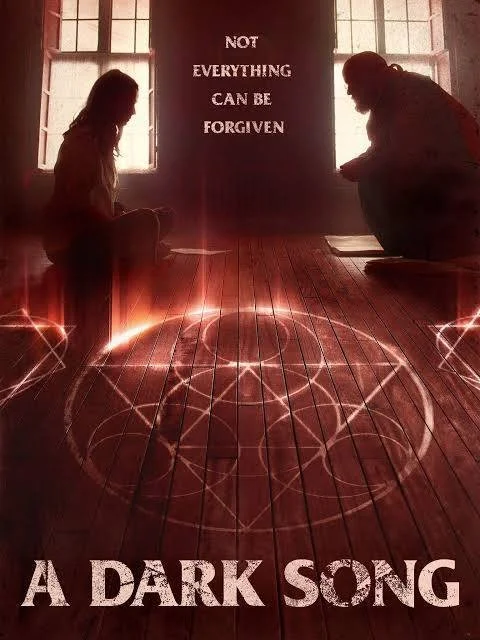
I have seen Liam Gavin’s 2016 Irish-British film often recommended in lists discussing distressing films. With a cast of mainly two actors and the setting mostly restricted to a house in the Welsh countryside over several months, A Dark Song uses horror and an occult lens to focus on the harsh process of grieving and loss.
The two leads are a grief-stricken mother and an occultist who embark on an attempt to complete an occult rite to reveal the mother’s “guardian angel” so she can make a request. The ritual the mother must perform with the occultist’s assistance is an incredibly complex, taxing, and brutal one from the grimoire The Book of Abramelin. The portrayal of the ritual makes it clear why so few people have succeeded in completing it and why there are so few people willing to even attempt it. During their time together, the two characters get to know one another through both cruelty and kindness throughout the film. With a satisfying and surprisingly optimistic ending for such a stressful movie, A Dark Song is worth checking out if you enjoy films with esoteric magic, themes of loss, and character studies.
Caveat and Oddity
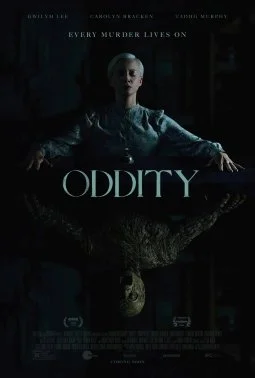
In academia, we joke about folks who are “lumpers and splitters” when it comes to classifying examples. For this list, I’m going to be a lumper and discuss these two films directed and written by Damian McCarthy together. Caveat, released in 2020, follows a man with amnesia after a head injury as he accepts a job to attend to a mentally ill woman on a small island. Oddity, which came out in 2024, focuses on a blind woman with psychometry trying to figure out the true perpetrator behind her sister’s murder. Both films make outstanding use of the isolated settings, minimal sets, and small casts. They are excellent at inducing a sense of unease and dread in the viewer. Both have some jump scares, but they are well deployed and not overused, as I am not the biggest fan of these types of frights in film. The props are also memorable! The drumming toy rabbits in Caveat and Oddity’s man-sized, wooden golem are unsettling.
MAJOR SPOILERS
Damian McCarthy seems to enjoy plots where the murderer often hires out the dirty work to a third party. The true killers in both films, Moe and Ted, are cowardly, arrogant slimeballs who use others to commit crimes on their behalf. It is hard to say who is worse, but I found Ted slightly more loathsome, if only because he is given more screentime in Oddity and his motivations for murdering his wife are so mind-blowingly arrogant.
END SPOILERS
While I thought Oddity was a tighter and better-done film, I recommend both films. I am very much looking forward to Hokum, which will be released this year (2026), and any other future films by McCarthy.
The Devil’s Doorway and Fréwaka
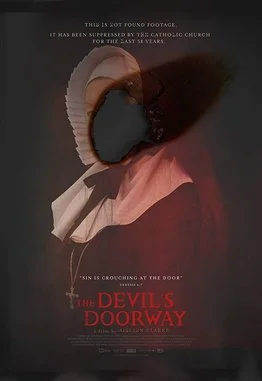
Here is another lumping! This time it is two films by director/writer Aislinn Clarke, 2018’s The Devil’s Doorway and 2024’s Fréwaka. The former is a found-footage period piece/religious horror focusing two priests investigating a potential miraculous event at a Magdelene Laundry in 1960s Ireland. The latter is a folk horror film following a home health care worker and the older woman she is caring for who believes she was kidnapped by fae-like beings in the past. Clarke seems to cleverly use both Irish history and myths to serve her horror stories.
Though Magdalene asylums/laundries were found globally, there have been tragic real-life horrors that took place in some of the Irish establishments, like the Bon Secours Mother and Baby Home in Tuam County. which may have inspired some of the film’s imagery. The scenes in the laundry and the shown or implied abuses were much more upsetting to me than the possession bits. Fréwaka is unique since a large portion of the film is in Irish (Gaelic) with less spoken English than the other films on this list. While some viewers assumed Clarke used the fae/mysterious beings as allegories, make sure to stick around for the end-credits scene, which I think cements that the events of the film are not merely metaphorical. I also enjoyed how she makes the fae a menacing threat to the leads of the film and the remote, rural setting gives the film an extra creepy vibe.
Both films are worth a watch, although I think Fréwaka is the better of the two. I hope it gains popularity and earns a strong reputation in the folk horror subgenre. The gritty filming style of The Devil’s Doorway lends it a realistic touch but many of the story beats are found in other films touching on religious horror. I will be checking out any work she does in the future!
Sea Fever
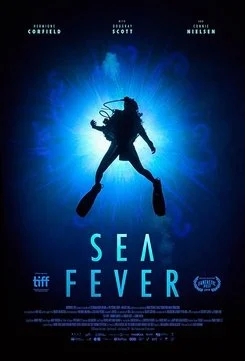
The release of this 2019 sci-fi horror thriller directed and written by Neasa Hardiman was negatively impacted by the COVID-19 pandemic. The film is set on a trawler with a small crew and a PhD student who is meant to investigate the behavioral patterns of deep-sea animals. When the ship takes a detour through an exclusion zone, it catches the attention of a mysterious creature that threatens the crew’s lives.
The open ocean/sea and general “sea fever”, aka going mad at sea, is scary enough without the added terror of bizarre pelagic or benthic creatures! It is a shame that this film seems unnoticed due to being a video on demand release and the themes of infections, quarantine, and isolation have become very relevant since the film was released. The creature is appropriately creepy and Hardiman wisely kept it very mysterious. Oftentimes, giving too many details can ruin the effect for audiences. The crew is well cast and makes the dwindling party hit more since we spend enough time with the crew to mourn losses. Siobhan, as the PhD student, and Omid, the engineer, are characters who I could make a whole “Mad Science” feature about. While the film is very restrained, it still delivers some scary moments and an overall interesting story. Also, if sea horror is up your alley, I will plug the anthology Sand, Salt, Blood edited by our DHR leader Elle and featuring some DHR contributors!
There are many more films which I did not include in my list, but these were just six Irish horror films I thought were worth checking out! Each is worth at least a single watch in my mind! As a USian, I’m always trying to make sure I’m viewing or reading horror from other countries. There are so many wonderful stories being told that may be overlooked by mainstream American audiences and hopefully we can get more eyeballs on them.
What are some of your favorite Irish horror movies? Have you seen any of these and if so, did you enjoy them?
Review by Dee
Twitter @Sirenofscience