Queer History
Welcome to our Queer History page! This is where we’ll showcase the queer history submissions that come to us via our handy Google Form. Find the link below if you’d like to submit your own!
For Pride in Horror 2026, we asked contributors and the community if they had any snippets of queer history they wanted to highlight. Queer history specifically is so often overlooked, not to mention how difficult it is to even research in the first place! Here, we’ll document all Queer History submissions from Pride and beyond.
If you would like to take part, if you have a snippet of queer history then please submit it via this Google Form. This can be a person, place or event, with an impact big or small. It can be a person local to you who inspired their local community, or an activist who had a wide reaching effect. It can be your local community’s first Pride Parade! If it’s meaningful to you, we want to spotlight it.
South Africa’s History of LGBT+ Rights
From contributor Xan van Rooyen -
Did you know South Africa was the first country in the world to protect sexual orientation as a human right within its constitution? This legislation came into effect February 4th, 1997. The constitution grants the right of equality and freedom from discrimination, specifically listing gender and sexual orientation. This was truly exceptional at the time and positioned South Africa not only as an African champion of equality and human rights, but as a global pioneer for LGBT+ rights.
Despite this revelatory move in the 90s, it wasn't until the early 2000s that same-sex marriage was officially recognised. In 2002, a lesbian couple - Marié Fourie and Cecelia Bonthuys - petitioned the Pretoria High Court and the Department of Home Affairs to recognise and register their union as an official and valid marriage. Although the presiding judge initially dismissed their application on the technicality of the definition of marriage as stipulated in the outdated Marriage Act of 1961, with the continued support of the Lesbian and Gay Equality Project, Fourie and Bonthuys didn't give up. After being denied again by the Constitutional Court, they took their case to the Supreme Court of Appeal, and the five-judge court unanimously ruled in favour of Fourie and Bonthuys, stating that the current common-law definition of marriage discriminated on the basis of sexual orientation.
The court suggested the definition should be changed to: "Marriage is the union of two persons to the exclusion of all others for life," but this required a change to the Marriage Act, which required parliamentary intervention. The Lesbian and Gay Equality Project thus launched their own lawsuit against the Marriage Act and eventually won in 2005 when the nine justices ruled unanimously that the definition of marriage in the Marriage Act was discriminatory and therefore unconstitutional.
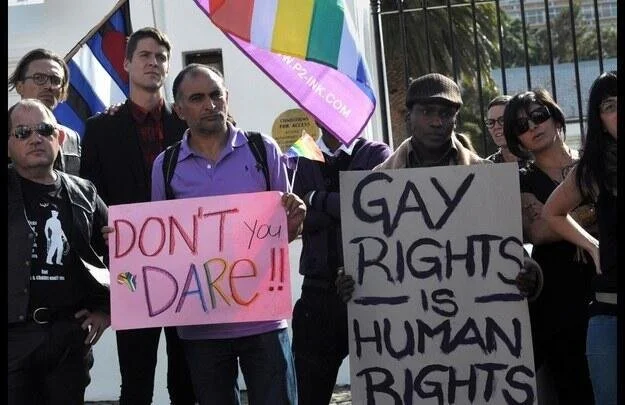
It took several more months, however, as well as large scale demonstrations in protest of a proposed 'Civil Union' bill - which would have granted marriage-like rights to same-sex couples without ever calling the union 'marriage' - before then-president Thabo Mbeki eventually signed the new marriage equality bill into law on November 29th, 2006. Despite objections from several religious leaders and more conservative political parties at the time, same-sex couples were able to get married as quickly as December 1st without any issue. This made South Africa the first country in Africa to recognize same-sex marriage, and only the fifth country in the world to end marriage discrimination as they joined the Netherlands, Belgium, Spain, and Canada in not only legalizing, but also providing constitutional protection for same-sex marriage.