Through Blood Tinted Glasses Article - Horror and the Disabled
Read: TBTG Introduction / Article: The Endurance of Dracula / Review: The Vampire Bat (1933)
Horror has always featured disabled characters, and, more often than not, in less than progressive ways. As noted in Disability, Literature, Genre (Ria Cheyne), “In horror, disabled characters are frequently monstrous perpetrators of evil acts or vulnerable victims or potential victims.” Think of your favourite horror film – are there disabled characters? Is the antagonist scarred, limping, masked to cover a deformity, portrayed as mentally unwell?
Welcome to Through Blood Tinted Glasses! This time, we’re considering The Vampire Bat, the 1933 horror directed by Frank R. Strayer. And just as the film reuses some of the sets from Tod Browning’s Dracula, it also reuses one of the standout characters from the film, even going so far as to have the same actor portraying him.
Dwight Frye absolutely stole scenes in Dracula, playing the disturbed Renfield. Here, he’s Herman Gleb – utilizing the same sort of mannerisms and behaviour, but in a much less threatening way. It feels like Herman’s character deliberately echoes Renfield, with his obsession with bats and almost constant presence in the town. It makes Herman’s role as a red herring work, too, with the questions quickly rising and centring on him.
But it’s clear to the audience Herman isn’t setting out to do harm, and if he is harming others, it’s not deliberate (as it turns out, he has absolutely no involvement in the killings). Herman is a standout character in the film, but he’s not a protagonist or antagonist. He is, in fact, an innocent victim, hounded and harassed by the townsfolk who are scared, and end up going for the classic scapegoat: the disabled.
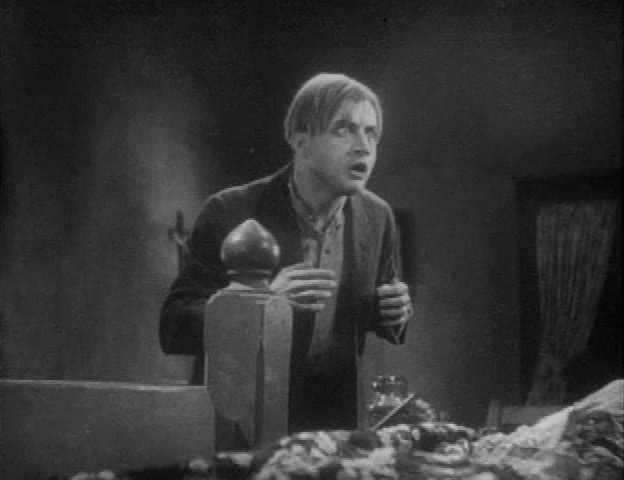
Dwight Frye as Herman in The Vampire Bat
Herman is a ‘vulnerable victim’ – he is targeted because of his disability, because the townsfolk, quite frankly, don’t understand him. We don’t know much about his character (keeping with most of the film, where we are very much left to fill in the gaps) – we don’t know where he’s from, who his family is, or why he’s in that specific town. But we don’t need to know these things to sympathise with him, or to recoil at his treatment. We do know he is treated kindly by one of the first victims, and deeply grieves her death. He tries to steal fruit from a garden, unsuccessfully as he’s caught by the film’s comic relief character, Aunt Gussie, who tries to help Herman, not seeing him as a threat until she realises he’s the person the whole town has been looking for.
Disability has always been present in horror, in varying forms. All too often, the disabled are represented as villains or victims, with little space between. Asylums – where disabled people were often shunted off to in the past – have become such a fixture of horror, many horror ‘attractions’ feature them as part of their sets. Unfortunately, too often disability is used as the source of horror, and although Herman isn’t the antagonist here, it’s his disability which makes him a target.
Herman is a victim of the horror in The Vampire Bat, but there is confusion thrown up around his character. It’s clear early on he’s not the vampire, but some of his actions and behaviours, combined with the obvious parallels to Renfield, do make you wonder, is he being manipulated by the vampire? Is he accidentally doing the vampire’s bidding, helping him access those ultimately killed by the vampire?
And although this isn’t the case, unfortunately the result is still that Herman offers a convenient scapegoat, drawing the attention of the townsfolk and distracting them from searching out the ‘real’ vampire. This ultimately leads to Herman’s death, but even his death serves the abled characters, as the killings continue and they come to the conclusion Herman wasn’t responsible. It positions Herman as a character without agency – vulnerable and unable to defend himself, helpless, and paying the ultimate price. He isn’t even killed by the ‘vampire’, but is instead chased into a ravine.
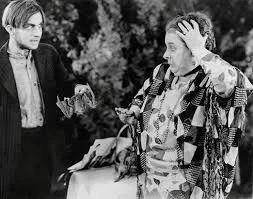
Herman and Aunt Gussie in the garden
It's a painful moment for a modern-day viewer. Combined with Renfield in Dracula, it’s a poor portrayal of the mentally disabled, and Dwight Frye’s influence echoes throughout subsequent vampire films, as well as horror more broadly.
However, considering this is 1933, it would be wrong to lay all of horror’s ableism at The Vampire Bat’s door. Instead, it’s worth considering the sympathetic way The Vampire Bat portrays Herman – he’s unintentionally charming, winning over Aunt Gussie who quickly realises he’s harmless (until she experiences a different shock which she attributes to Herman), and he’s resourceful, sneaking into gardens to steal fruit. Although through modern eyes, we can see the issues with Herman’s naïve, innocent and ultimately tragic portrayal, the film invites us to sit on Herman’s ‘side’. Herman falls into ‘Bury Your Disabled’, but there is nuance here in looking at the way he is treated by the town, versus the way he is treated by the film. It’s the ‘good’ characters who defend him and don’t believe he has a part in the killings, yet it’s still our ‘hero’ who gives the mob permission to chase Herman down.
Despite the sympathetic view, however, we can see through the early films how these harmful tropes take shape. Similarly to the previous examination of Dracula, this is a topic that will crop up again with future films, especially considering the vampire film’s reliance on Renfield-type characters to aid – willingly or unwillingly – the vampire.
Although in some ways Herman is sympathetic, ultimately the portrayal forms the foundation for many ablest tropes within horror, and especially in vampire films. Disability is definitely an area where horror needs to do better, and it’s important to be aware of these early portrayals. While Dracula as a character endures, so does Renfield, as both a character and archetype, and we’ll keep watch to see how this particular character evolves – or doesn’t – in future films.
By Elle Turpitt
Twitter: @elleturpitt
Bluesky: @elleturpitt.bsky.social