

Essay: Viewing Trauma Through A Camera Lens in The Blair Witch Project

The Blair Witch Project (Daniel Myrick and Eduardo Sanchez, 1999) took the horror world by storm when it burst onto the scene as one of the first ‘found footage’ horror movies. As a result, the film has always been subject of much discussion around the use of the camera, and I am going to explore the use of the 16mm camera throughout the film.
From the beginning of the film, the black and white 16mm camera is given a very specific meaning; it is the camera used to film the documentary, whilst the other camera is for the crew’s (Heather, Josh and Mike) use. The more formal 16mm is black and white, which appears to be representative of Heather’s mindset. The documentary is black and white, as the facts are black and white, emphasised by the story told at the film’s opening. “I’m just telling a scary story but it’s not real. (It is.)”
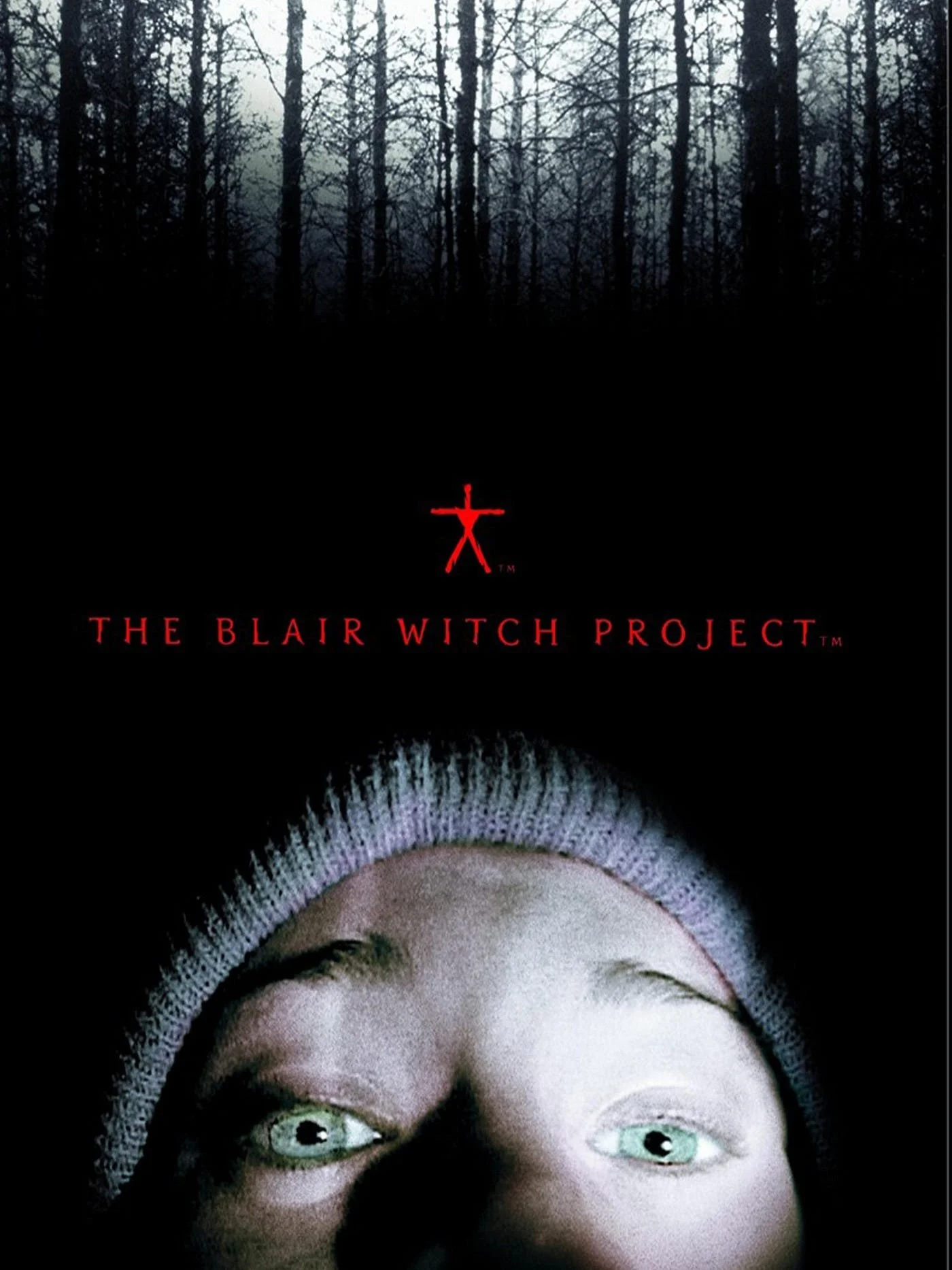
Throughout the film, Heather takes the use of the 16mm very seriously. She gets irritable when things she sees as ‘a waste’ are recorded on the 16mm camera, something used against her by the boys, who deliberately record shots she is unaware of after her outburst. However, once the crew become lost in the woods, Heather’s relationship with the camera changes as her use of the camera changes. She starts documenting what is happening to them, using the 16mm camera to do that, for example, when they come across the icons in the forest, her first reaction is “I need to use the CP!”. Later on, when they are attacked in the night, Heather is recording using the 16mm while running away. The documentary that the audience are watching is now no longer about the legend of the Blair Witch; it is about Heather, Josh and Mike.
The use of the 16mm camera changes for Heather as the film progresses. As more and more unexplainable and terrifying things happen to them, the more Heather clings to it, telling Mike that its “all she has left”. She cannot stop herself from recording b roll footage and their casual conversation about leaving the forest; it is almost like if this conversation is filmed as part of the documentary, there is a chance at a happy ending while they have lost hope in their reality. It appears that, for Heather, if she records what is happening to them, the fear and horror is worth it.
Interestingly, Heather cannot stop being a filmmaker, up until her final moments. She is still documenting at every part of their journey, even as they are dying, however, when she fully relinquishes her filmmaker persona and breaks down, she films it on the colour camera. She cannot let herself become a bigger part of the documentary than she is, and ‘degrade’ it with her emotions.
The film’s ending is filmed from two perspectives; Mike’s and Heather’s, and crucially, Heather is filming in 16mm. She is completely lost to the filmmaking; even in their final moments, when she’s screaming for Mike in terror, her shots are slower and more artistic, making sure to capture every detail. Unfortunately for Heather, her refusing to film her emotional breakdown has not changed her fate. Documentaries are not like fiction films, they do not always end in happy endings, as the crew have found out. The last shots of the film are filmed on the 16mm from Heather’s perspective. The camera drops out after she has been removed from the narrative, as if the movie cannot end until she does.
The use of camera has always been one of the The Blair Witch Project’s defining characteristics, and that plot line even is explored within the confines of the film itself. The use of the 16mm camera legitimises the trauma the characters go through by presenting it as a documentary, adding another layer to the film as a found footage narrative.
Essay by Sarah R. New
Twitter/Bluesky/Instagram: @aldbera