Listicle: Gothic Themes & International Films Part 1
I watch a lot of Gothic and Weird films, monster-themed films, folk horror, and so on, and it’s very hard to do a non-spoilery review of any of them. I love to find films from all over the world that fit different themes, because even if those films are not “Gothic”, it’s fascinating to me to see how these themes appear and are interpreted in other cultures and traditions.
Since 13 is a pretty Gothic number, I’m going to take my top 3 favourite Gothic themes/tropes, and share 10 films from around the world that I think fit one or more of them.
I’ve omitted the obvious ‘Creepy Old House’ trope (my one true love) as there are far too many films that just fit that one alone, and instead gone with the following:
1. The Power of the Landscape. This might be its power to invoke awe and dread, the 18th Century concept of the Sublime, or it might be that the landscape itself is out to get you in a sentient way. The Gothic landscape isn’t just a place that represents and foreshadows death; it reflects other uncertainties, and the anxieties that surround these uncertainties. If we’re leaning harder into the Weird, then there might be that there is something intrinsically off about it that will catch you unawares. The landscape in this latter case may not be actively participating in your downfall, but it’s warped and twisted in some strange way, and you are about to pay the price for walking in the wrong direction. It could also be that the landscape is simply dangerous, and/or a key feature in building atmosphere and dread.
2. Haunted by the Past. This could be a past event, or a past relationship; it could be a past trauma, either individual or collective. Either way, something is emerging, and it’s after you.
3. Human-Passing Monster. One or more of the ‘human’ characters is not what they seem. This could involve a transformation of a character, or the character might always have been this way.
I’m endlessly fascinated by the way these themes interact with one another, too. This happens to some extent in the films I’ve chosen, where Human-Passing Monsters are carrying the burden of a past catching up to them, or perhaps transgressions against the landscape result in ancient forces arising in retribution.
I can think of loads more examples than the ones here, and across multiple genres, but I think these 10 will do for now; each film has its blurb, a mini-review, and how I think it fits the three themes I’ve listed above.
I’ll go through these in alphabetical order by English language title for consistency but give the original titles in their original language where applicable! The ‘JustWatch’ links beneath each film will take you directly to that film’s page, where you should see all the links to stream, rent, or buy.
As something of a corrective to the lack of Greek authors in Greek myth-inspired anthologies, and a dearth of Greeks retelling their own myths in the world of English-language publishing and filmmaking, I’ve included two Greek films that pull from their own myths and folklore.
As a little added treat, I’ve included a bonus book pairing to the movies I’ve recommended! So, if you’re fancying a book instead with similar themes (may not be the same genre), check out the book bonus.
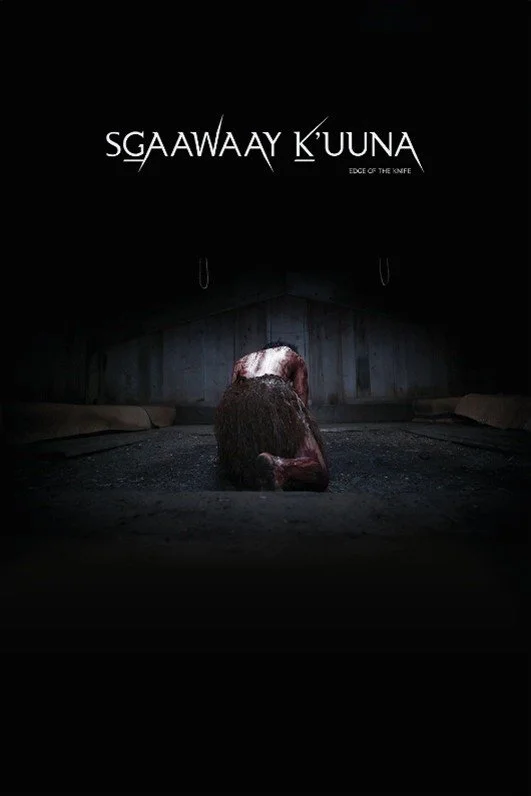
Edge of the Knife / SG̲aawaay Ḵ'uuna (2018) dirs. Helen Haig-Brown, Gwaai Edenshaw
Country: Canada
Genre: Drama/Horror
Age: Adult
Format: Feature Film
Runtime: 100mins
Blurb: Island of Haida Gwaii, northern Canada, 19th century. During a fishing gathering, Adiits’ii commits an unfortunate act. Tormented, he runs away to the wilderness as his mind embraces madness.
This is the first film in Xaat Kíl, the Haida language, an endangered Indigenous language. It’s a take on the Gaagiixiid, or wildman, tale, in which a man transforms into something monstrous through the intensity of his guilt, and can only be restored to himself by his community, and their collective effort to restore him to them, and to himself. When your guilt and grief twist you into perceiving yourself as monstrous, and drive you to monstrous acts, there can be a way back through the bonds of community. It’s very much a counterpoint to European constructions of monstrosity as something to unite the community against, or as something that serves as a sign and a warning to others because of its irredeemable Otherness. Additionally, I think this film and its focus on the elder women and their roles within Haida society is also a good counterpoint to patriarchal norms and constructs, particularly in contrast to European monster hunt narratives.
It’s also worth noting that this is a film made for a Haida audience, so it doesn’t explain everything, particularly not concepts that are familiar to the Haida but perhaps not so understandable or accessible to outsiders. I really liked that aspect, personally, and I felt it really worked within the film to give it a feeling of a cohesive narrative grounded in its culture and heritage.
For all streaming options and links, check out JustWatch.
I own a copy of this on Blu-ray, via the Folk Horror Compendium, ALL THE HAUNTS BE OURS Vol. 2, produced by Severin Films.
Looking for a book?
For more Arctic horror by First Nations voices, try Taaqtumi: An Anthology of Arctic Horror Stories (Inhabit Media, 2019).
Ages: 16+
Blurb: “Taaqtumi” is an Inuktitut word that means “in the dark”—and these spine-tingling horror stories by Northern writers show just how dangerous darkness can be. A family clinging to survival out on the tundra after a vicious zombie virus. A door that beckons, waiting to unleash the terror behind it. A post-apocalyptic community in the far North where things aren’t quite what they seem. With chilling tales from award-winning authors Richard Van Camp, Rachel and Sean Qitsualik-Tinsley, Aviaq Johnston, and others, this collection will thrill and entertain even the most seasoned horror fan.
Goodreads / Inhabit Media / Amazon / Waterstones
Entwined / Άλυτη (2019) dir. Minos Nikolakakis.
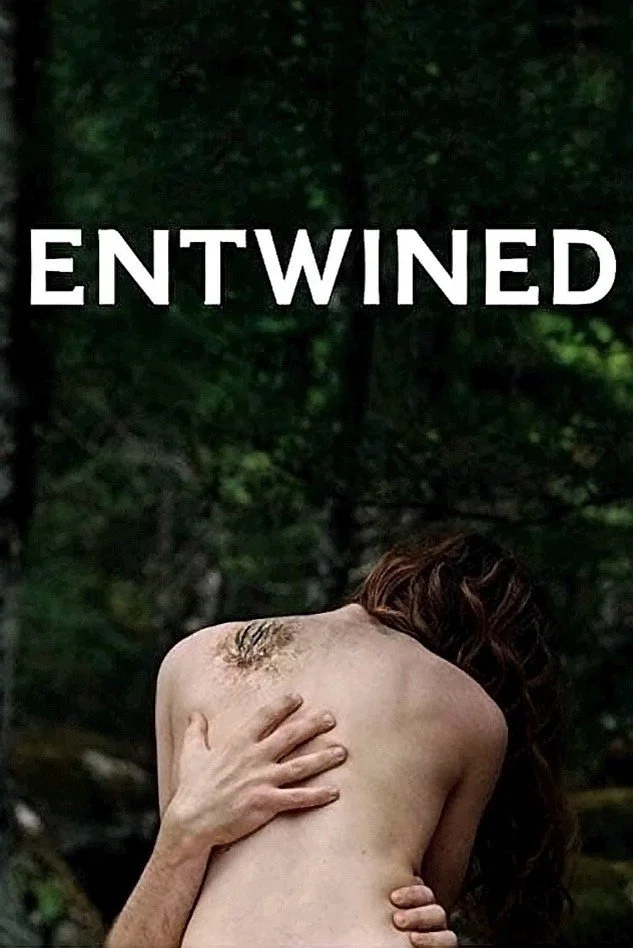
Country: Greece
Genre: Folk Horror/Fantasy
Age: Adult
Runtime: 89mins
Blurb: She is not what she seems
Panos, a city doctor, relocates to a remote Greek village to offer his services to the underserved community. It’s love at first sight when he sees Danae, who lives in isolation and with a mysterious skin condition. Determined to cure her, Panos will soon discover Danae is not the helpless princess he thought she was, and time is of the essence for both of them.
TW: Panos witnesses what he believes to be father-daughter incest.
This is a modern, slow burn, erotic, Bluebeard-esque tale, in which a doctor is seduced by a woman who tells him she is caring for her elderly father. He witnesses the old man apparently raping her, and in turn he abuses his position to have sex with her as well. The initial impressions he had turn out to be completely wrong, and the identities of both Danae and the old man are revealed too late for Panos, who is now entwined too tightly to escape his own fate, but when Panos’s brother comes to find him, what will happen to them both?
This is very slow, and incredibly dark. You have to really like genderbent Bluebeard narratives, transgressive relationships, tragic endings, misty forests, sad widows silently mourning their lost sons, and appreciate the very Greek lens through which Greek myth is reinterpreted. It’s not scary – it’s deeply Gothic, and deeply Weird, in the style of Weird Fiction that features fae and otherworldly beings.
For all streaming options and links, check out JustWatch.
Looking for a book?
For another Gothic Bluebeard tale by a Greek author, try Sour Cherry by Natalia Theodoridou (Wildfire, 2025)
Ages: Adult
Blurb: Something terrible has happened.
In a mysterious apartment filled with ghosts, our unnamed narrator attempts to explain this to her child - how do I talk about this? she wonders.
The truth must become something beautiful. We must begin with a fairy tale.
And so she begins to construct a beautiful fairy tale for her child - one that begins with a strange baby boy whose nails grow too fast and whose skin smells of soil. As he grows from a boy into a man, a plague seems to follow him everywhere. Tragedy strikes in cycles - and wife after wife, death after death, plague after plague, every woman he touches becomes a ghost. These ghosts call out desperately to our narrator as she tries to explain, in the very real world, exactly what has happened to her.
And they all agree on one thing, an inescapable truth about this man, this powerful lord who has loved them and led them each to ruin:
If you leave, you die. But if you die, you stay.
A debut novel as emotionally poignant as it is fiercely smart, Sour Cherry is an arresting debut examining toxic masculinity through its chorus of women - deconstructing the idea of what makes someone a monster.
Plus: 9 Greek Myth Retellings by Greek Authors
The Feast/Gwledd (2021) dir. Lee Haven Jones
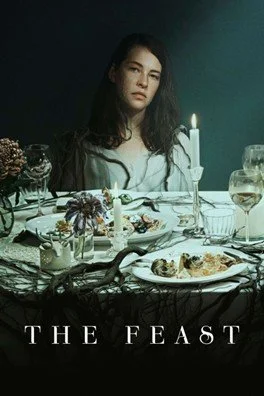
Country: Wales, UK
Genre: Drama/Horror/Fantasy
Age: Adult
Format: Feature Film
Runtime: 93mins
Blurb: While they feast, she waits.
A wealthy family hosts a sumptuous dinner, only for a mysterious young server to chillingly unravel their lives with terrifying consequences they could never see coming.
Rooted in Tylwyth Teg folklore, this one is a smorgasbord of ecohorror and class dynamics, tapping into Welsh Gothic tropes of the betrayal of the land by Wales’s affluent elite, and the consequences wrought upon them by ancient forces within the Welsh landscape. When the Sleeper In The Hill is awoken by fracking, she uses the body of a young woman from the village – who, ordinarily, would be at the mercy of the rich family she is working for – to explore the strange new world she has entered, and to be her vessel of retribution. It is very slow to start with, giving plenty of space to the family and the dynamics and the atmosphere. As soon as Cadi shows up with her hair wet (bodies of water are entrances to the Welsh Otherworld), and the iron axe head falls off its handle, you know things are going to kick off.
There are so many elements I love about this film, including Nia Roberts as Glenda, so desperate to be a modern woman and completely unlike her mother and grandmother, until the threat to the menfolk in her family drives her back full circle into the past she tried so hard to reject and build over. This is an absolutely classic trope of Welsh Gothic Horror – don’t betray your past, because she won’t like it.
For all streaming options and links, check out JustWatch.
Looking for a book?
For more Welsh folklore and Haunted by the Past themes, try Ghostbird by Carol Lovekin (Honno Welsh Women’s Press, 2016)
Ages: Adult
Blurb: Someone needs to be forgiven. Someone needs to forgive.
Nothing hurts like not knowing who you are. Nobody will tell Cadi anything about her father and her sister. Her mother Violet believes she can only cope with the past by never talking about it. Lili, Cadi's aunt, is stuck in the middle, bound by a promise she shouldn't have made. But this summer, Cadi is determined to find out the truth.
In a world of hauntings and magic, in a village where it rains throughout August, as Cadi starts on her search the secrets and the ghosts begin to wake up. None of the Hopkins women will be able to escape them.
Goodreads / Amazon / Honno / Bookshop.org
House of Money /Ile Owo (2022) dir. Dare Olaitan
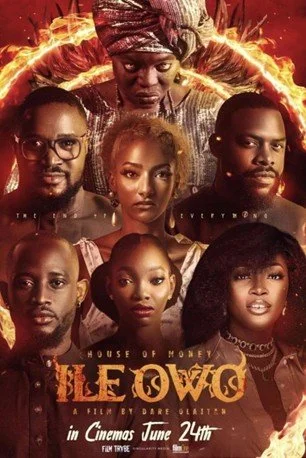
Country: Nigeria
Genre: Fantasy/Horror
Age: Adult
Format: Feature Film
Runtime: 95mins
Blurb: Busola has forever been unlucky with love. Pressured by society and her parents to tie the knot as a means to lift her family out of poverty, she finally meets Tunji – the perfect man. At first, Busola struggles to understand why a billionaire would choose to marry her, but after she accepts his proposal of marriage, a series of increasingly disturbing discoveries lead her to a truth she could never have imagined.
This is a take on the “Strange Suitor” folklore tales, in which a woman is tricked into marrying a monstrous husband. In this case, the story of how the (human) patriarch (nicknamed ‘Owo’, or, ‘Money’ because of his great wealth) turned his sons into immortal monsters via the sorceress Fijabi, is revealed in the opening animated sequence. I absolutely loved this animation. Then we flip to live action and the present day, where poor nurse Busola gets rid of her cheating crypto-bro boyfriend, only to be swept off her feet by the handsome, smooth-talking Tunji, one of ‘Owo’’s billionaire immortal sons, whom she meets at the hospital as a patient. What follows is a Bluebeard-type tale that is pretty reminiscent of The Invitation (2022) dir. Jessica M. Thompson, with Busola’s apparent rags-to-riches fairytale taking some very dark twists. The dark influences over her father, ensuring that her Christian mother cannot interfere, is particularly messed up.
It’s a messy, lower budget movie, but I personally really enjoy it. The ending could be a bit stronger, but if you like Nollywood films, this is not the worst horror-fantasy out there. It’s a comfort watch for me.
For all streaming options and links, check out JustWatch.
Looking for a book?
For more Nigerian magic and folklore, with love and loss in Lagos but make it queer – try Vagabonds! by Eloghosa Osunde (Riverhead Books, 2022).
Ages: Adult
Blurb: VAGABONDS! is a tumultuous and unexpectedly joyous novel of oppression and defiance among the people and spirits of Lagos.
Lagos is a city for all . . . you share this place with flesh and not-flesh, and it’s just as much their city as it is yours.
Èkó, the spirit of Lagos, and his loyal minion Tatafo weave trouble through the streets of Lagos and through the lives of the ‘vagabonds’ powering modern Nigeria: the queer, the displaced and the footloose.
With Tatafo as our guide we meet these people in the shadows. Among them are a driver for a debauched politician; a lesbian couple whose tender relationship sheds unexpected light on their experience with underground sex work; a mother who attends a secret spiritual gathering that shifts her reality. As their lives begin to intertwine―in markets and underground clubs, in churches and hotel rooms―the vagabonds are seized and challenged by the spirits who command the city. A force is drawing them all together, but for what purpose?
In her debut novel VAGABONDS!, Eloghosa Osunde tackles the insidious nature of Nigerian capitalism, corruption and oppression, and offers a defiant, joyous and inventive tribute to all those for whom life itself is a form of resistance.
Goodreads / Amazon / Waterstones / HarperCollins Publishers
The Long Walk / ບໍ່ມີວັນຈາກ (2019) dir. Mattie Do
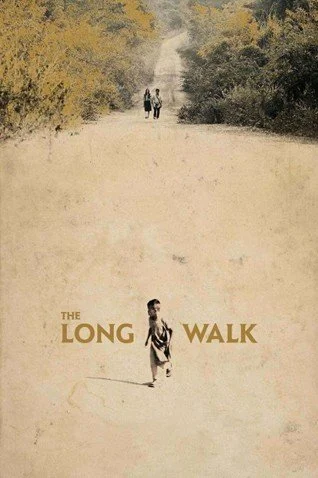
Country: Laos
Genre: Drama/Horror/Science Fiction
Age: Adult
Format: Feature Film
Runtime: 116mins
Blurb: An old Laotian hermit discovers that the ghost of a road accident victim can transport him back in time fifty years to the moment of his mother’s painful death.
This is a devastating one. It explores the butterfly effect of time travel, until the hermit’s trajectory has warped and changed so much from the start of the film that he’s become a different character by the end of it. In this case, the old man is haunted by his past to the point that his past becomes haunted by his future, and it is all focused on the dusty road to his farm. It’s a story about the destructive power of isolation, anger, and rejection of others, I think, or at least that’s how it read to me.
I especially liked the road imagery, as even though it’s not the landscape itself which is facilitating the journey back in time (it’s the ghost), the road is in itself a symbol of his journey, the unchanging element that ties the narrative together, a haunted place, and a place of possibilities. It’s also a place the protagonist never escapes from – he is always on that road, travelling backwards and forwards through his own life. I think that’s just really sad, and the layers get deeper the more I think about it.
For all streaming options and links, check out JustWatch.
Looking for a book?
For more time travel shenanigans, this time in Japan, where four characters are Haunted by the Past and so go back one more time for some resolutions and answers, try Before the Coffee Gets Cold by Toshikazu Kawaguchi, translated into English by Geoffrey Trousselot (Picador, 2019). This book has the opposite premise to Do’s The Long Walk: no matter how hard the time travellers try, the present doesn’t change. But when they return to the here and now, will they still be haunted by the memories and knowledge of what has gone before?
Ages: Adult
Blurb: What would you do if you could travel back in time? More importantly, who would you want to meet, maybe for one last time? Toshikazu Kawaguchi’s Before the Coffee Gets Cold, translated from Japanese, explores this age-old question . . .
In a cosy back alley in Tokyo, there is a cafe which has been serving carefully brewed coffee for more than one hundred years. But this coffee shop offers its customers a unique experience: the chance to travel back in time.
Prepare to meet four visitors, each of whom is hoping to make use of the cafe’s time-travelling offer in order to:
- confront the man who left them
- receive a letter from their husband whose memory has been taken by Alzheimer's
- see their sister one last time
- meet the daughter they never got the chance to know.
But the journey into the past does not come without risks: customers must sit in a particular seat. They cannot leave the cafe. And finally, they must return to the present before the coffee gets cold . . .
Goodreads / PanMacmillan Guide to the Series and Where to Buy