Pride in Horror Profile: Steve Hugh Westenra
Steve Hugh Westenra
Writer, Reviewer, Academic
Bluesky / Website
Bio
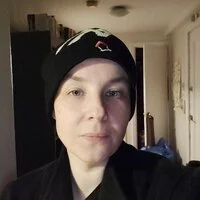
Steve Hugh Westenra (He/Him) is the pen name of an academic expert on monsters and the monstrous. His short fiction has been published in New Edge Sword and Sorcery. He is the author of the The Erstwhile Tyler Kyle (a queer horror comedy about a cryptid-hunting YouTuber), The Wings of Ashtaroth (a sprawling epic fantasy set in a world based on Ancient Carthage), The Barbarian at Dream’s End (forthcoming from New Edge Sword and Sorcery) and Breadcrumbs on a Forest Floor (an upcoming novella about a trans man from rural Newfoundland who was taken by the fairies and returns on the grave of the changeling who replaced him). The Erstwhile Tyler Kyle is a 2026 Indie Ink Award Finalist. Born in England, Steve grew up on the eldritch shores of Newfoundland, Canada, and has since worked in the slightly-less eldritch Montreal. He is a judge in a number of indie writing competitions and reviews books online. He is trans and, like all academics, neurodivergent.
Books
The Erstwhile Tyler Kyle
What drew you to horror?
There’s always been something innate in me, I think, that’s gravitated toward horror and toward work that could in any way be called sinister. While I wasn’t born wearing a Dracula cape (I watched the same cartoons as other children of the late eighties and early nineties), the more disturbing, fricative, and aesthetically macabre something was, the more I felt a pull toward it. It wasn’t just mental, either; it was a sensation I’d describe as full-bodied. When I was little, that might mean a unique experience of excitement concerning a spooky episode of a favourite TV show (“Escape From Midnight Castle,” the first generation My Little Pony episode was very formative for me), or it might mean deliberately horrifying children’s books like “The Green Ribbon,” or Scary Stories to Tell in the Dark. It’s important to mention, too, that kids TV and film when I was growing up was much less afraid of dark subject matter. A lot of staples of my childhood–Watership Down, The Secrets of Nimh, and The Last Unicorn–deal not only with pretty complex themes, but with some truly horrifying material. On the one hand, even at a young age, Gothic aesthetics certainly appealed, but there was also something subconscious going on in terms of an obsession with themes of transformation. You get transformation in other genres, of course, but there’s something more visceral, more honest about transformation in horror. Horror tends to reckon better, I think, with the messiness of the body transformed. I wouldn’t reduce my love of horror (or of transformation) to simply being about my transness, but I do see a connection there, as have many trans people who love the genre.
As a kid, I wasn’t technically allowed to watch any overt horror (outside Christmastime ghost story adaptations, like the work of M. R. James). I still used to sneak it in though, catching Are You Afraid of the Dark? while my parents were working in the garden, or stray episodes of The X-Files. It probably sounds contradictory, but we used to watch Unsolved Mysteries and similar shows as a family. Only once I was around twelve or thirteen was I able to watch more gruesome horror offerings. The world of horror really opened up to me after that and I basically threw myself into it.
For me as a writer, horror’s very much a space in which it feels as though one is still allowed to explore challenging subject matter without restraint or finger-wagging. There’s not only licence to express the otherwise inexpressible, it’s encouraged. When you write a lot about characters who carry significant traumatic baggage, or who experience truly brutal things, that’s very helpful.
There’s a degree to which the stakes in horror are often very high. By this, I don’t necessarily mean world-ending, which I think is a common misconception when people hear the phrase “high stakes.” Rather, the stakes are often profound and personal. The threat undergirding those stakes also often means permanent change to the characters and/or their situation.
Who or what are your biggest inspirations?
So many! Too many! At a very basic level, the books, shows, movies, and stories I highlighted above had a huge impact on me (as I think all art we engage with as children and teens does). For my queer horror comedy, The Erstwhile Tyler Kyle, I was very influenced by the work of David Lynch–both Twin Peaks and the way that in general he likes to combine noir with a very dreamlike (or nightmarish) feel. The Silent Hill games were also pretty influential on not just TETK, but on the way I tend to approach horror in general. Silent Hill has always been very excellent at evoking a particular affective response in the audience, and in many ways, I think as a writer I’m sort of chasing that.
Horror is always at least a little funny, and I’ll go to my grave arguing that. Sometimes the humour may be more obvious, but it’s there nonetheless. TETK is explicitly a horror comedy, and it’s also very intentionally campy. There are moments where its queerness really rubs up against The Rocky Horror Picture Show, for example. It will probably surprise readers who are fans of Buzzfeed Unsolved and Ghost Files, but that inspiration came in pretty late. I more or less became a fan of those shows through researching online supernatural “hunters” for the book. It’s such a fun creative team though, and I highlight recommend all their shows for anyone who needs a bit of cheer in their life while navigating today’s world! If TETK has any of their particular magic to it, then I take that as a compliment.
In many ways, I wanted the book to be able to go very deep in terms of its more horrifying and deeply personal moments, while also balancing that with high camp. It’s very validating when a reader picks up on that and appreciates it–it lets me know I’m maybe doing something right.
In a general sense though, like most artists I draw inspiration for the world around me, from my own experiences (particularly in my case, my own queer experiences), and from the cumulative body of art I’ve been exposed to since I was a child. For TETK, there’s a lot in terms of certain themes, such as those involving parasocial relationships and queer yearning, that draws on some of the unhealthy behaviours my friends and I developed roleplaying together for years. On a more practical and specific level, there are bits of Newfoundland history, weird Canadian geography, and Newfoundland media history, that made it into the book!
What’s one piece of advice you wish you’d known when starting?
That depends on what’s meant by “start.” I think, in terms of writing and querying, I had to gradually (and painfully) internalize that the publishing industry was neither fair nor particularly romantic in the way I’d internalized since childhood. For much of my life I’d thought of it as this artistic realm in which I’d finally find my place with fellow nerds and creatives. The reality was very jarring and disappointing. At the same time, if I’d known then what I know now, maybe I wouldn’t have ever finished a book, so it might be for the best that I can’t go back in time and warn myself.
In some ways, I do wish I had given up on traditional publishing sooner.
What is your favourite queer book/film/podcast etc?
Ahhhhh! This is such a mean question. I’ve loved so many queer books, movies, shows, and other media. Timothy Findley’s Not Wanted on the Voyage is a classic, and a couple of years ago I read Dennis Cooper’s The Sluts and adored it. An Unkindness of Ghosts by Rivers Solomon is another banger of a recent read, along with Paradise Rot by Jenny Hval and Sofia Ajram’s Coup de Grâce. Elliott Gish’s Grey Dog is one recent horror offering that’s impressed me, along with David Demchuk’s Red X, and Adam McOmber’s works.Erotica’s not my personal thing, but I’d very much recommend The Scales of Seduction by Rien Grey for its stunning prose (and I’m sure erotica fans will adore it on a whole other level). Other recent favourites include Teeth by Soraya E. Quinn, Dani Finn’s Grey Angel, Welcome to Dorley Hall by Alyson Greaves, and Tom Cho’s Look Who’s Morphing. Sarah McKnight and Jillian Maria are also doing great stuff, no matter the genre.There are also a lot of SFF writers in horror-adjacent spaces, such as Al Hess, who I’d recommend and who don’t need an introduction.
On screen, I was impressed by Knife + Heart, and of course, I Saw the TV Glow. There’s also a Canadian mini-series-turned-movie called Eyes in the Woods that I’d recommend checking out if you’ve read and enjoyed TETK. And of course, in terms of podcasts, it’s got to be Welcome to Night Vale.
One of the really exciting things to see (and, to a minor extent as an indie author, be part of) is a recent explosion of trans horror. From Lee Mandelo, Alison Rumfitt, Logan Ashley-Kisner, and Hailey Piper, to indie authors like some of those listed above, it’s a beautiful thing to see trans authors, filmmakers, and other artists carving spaces for themselves.
Pride in Horror is all about celebrating our queer community! So is there anyone you want to shout out to who has helped along your own journey?
So many people have helped me (and I know I’ll accidentally leave people off, so apologies)! But, to name a few, K. A. Doore, Mary Ann Marlowe, Alistair Reeves, Kola Heyward-Rotimi, Samantha Rajaram, Maria Dong, Ava Reid, Dani Finn, J. Patricia Anderson, Daniel Maidman, Mika Hunter, Esmay Roselyne, Jamedi, Shaggy Shepherd, Niranjan, Trudie Skies, Elliott Gish, David Demchuk, Oliver Brackenbury, Brynn Hammond, and a whole host of other reviewers, authors, and readers! Seriously, thank you thank you thank you (and thank you–Karen Lucia–as well)!!