Through Blood Tinted Glasses Article - What Makes a Vampire Movie?
Read: TBTG Introduction
Articles: The Endurance of Dracula / Horror and the Disabled
Review: Mark of the Vampire
You know a vampire when you see one, right? They’re the pale creatures in the corner, lurking in the shadows, maybe with some bats or opossums; they live in castles full of candles and dust, they are vulnerable during the day, have fangs but no reflection, and maybe some other abilities as well. But vampires come in all shapes and sizes, they’re occasionally loosely defined or creative liberties are taken. And sometimes, our vampire films contain no vampires at all, or a different type of vampire (such as in The Vampire Bat), so what makes a vampire movie, if it could be missing that one crucial ingredient?
Welcome to Through Blood Tinted Glasses! We are now on the third of our vampire movies, and this contains huge spoilers for the 1935 horror mystery, Mark of the Vampire. If you haven’t yet watched this 60-minute film, I suggest you go do that now and come back to this after you’ve seen it. You have been warned.
Mark of the Vampire, starring Lionel Barrymore, Elizabeth Allan, Bela Lugosi, Lionel Atwill and Jean Hersholt, starts with the death of Sir Karell, the father of Elizabeth Allan’s Irena Borotyn. With the body drained of blood and two puncture marks in his neck, there is only one logical conclusion the local doctor can come to – there is a vampire, likely Count Mora and his daughter. We get no embellishment on these characters, when they came to the area, how long they’ve been there, but when we see them they certainty fit the bill for what we’ve come to expect of on-screen vampires: Count Mora is even played by Bela Lugosi, and seems to have reused his Dracula costuming. Significantly, Luna (Carol Borland) is the first we’ve seen of what would become the ‘standard’ female vampire, with her long hair and alluring, almost bird-like features. The two lurk around, creeping out of shadows, with the count sending Luna off into the night to seemingly seduce Irena.
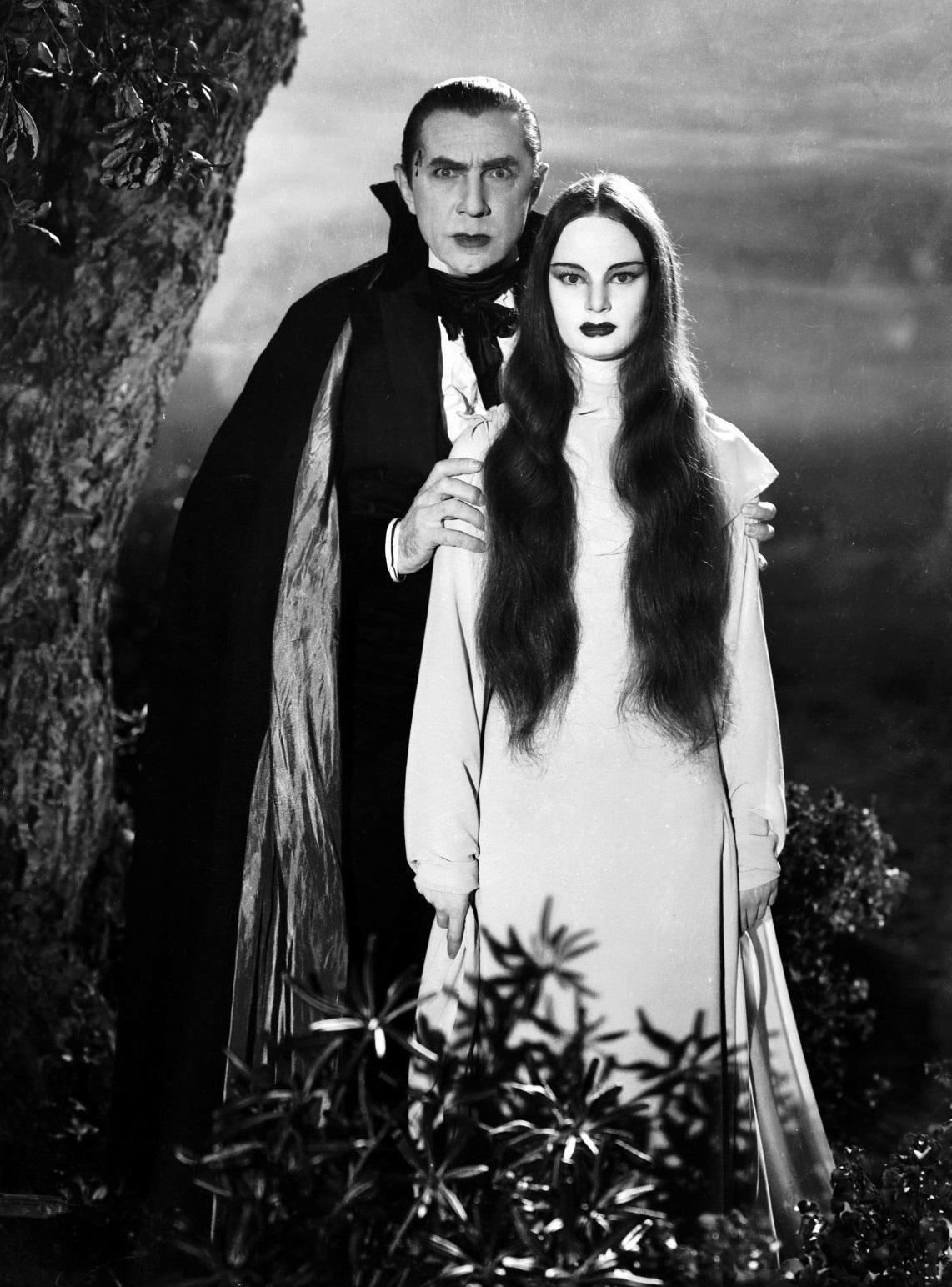
That’s it then, isn’t it? We have our murdered victim, we have the sceptic investigator who doesn’t believe this could be the work of vampires but doesn’t have another reasonable explanation, we have the family friend desperate to discover what happened, a woman who becomes the next target, and even an occult expert who arrives Van Helsing style to help the heroes get to the bottom of things and destroy the vampire.
And because vampire victims don’t always die, we even get the return of Sir Karell, tempting his daughter to come join them on the dark side. It is, essentially, Dracula, and to a point feels like Tod Browning is reworking his own film. Until Irena declares she can’t do it, that he looks too much like her father, and we discover there are no vampires at all, that this has been, in fact, a long game to catch the real killer, involving two travelling actors – including ‘Count Mora’ who announces to his companion he has an idea for a new act!
So, if there’s no actual vampires present, is this a vampire movie? Without it being marketed as such, the twist doesn’t work – you have to completely buy in to the idea of vampires for the rug to be pulled from under you, even though, when it comes down to it, it still doesn’t make a lick of sense. Still, that aside, it really does beg the question – what makes a vampire movie a, well, vampire movie?
In Jeffrey Weinstock’s The Vampire Film, the author lays out a number of key principles that go towards creating this beloved of monsters, the ideas that underlie the vampire movie, no matter what kind of vampire we’re dealing with. We’re not going to go through all of these, but there are a few worth touching on. Like the previous articles, this topic will be revisited as we move through the history of vampire movies.
The first principle – the cinematic vampire is always about sex. Does this apply to Mark of the Vampire? Like Dracula, the target of the vampire is Irena, a young, attractive woman who, like Mina, already has a partner. Of course, the fact they are targeting her is explained away by the plan to expose the real killer – her father was murdered, so she can be counted on to play along. But until this, there does seem to be a sexual element, even in the way Luna tries to tempt Irena. In addition, as the killer is exposed, we find out his motivation for killing for the murder was because Sir Karell’s death would make him Irena’s guardian. Notably, he pushes Sir Karell when he mentions agreeing to Irena marrying her beloved, remarking that he believed Irena was always destined to marry him. So, whether it’s the faux vampires or the real killer, possession of Irena and, apologies for the crudeness, ‘access’ to her does seem to be at the heart of the tale. The principle itself does refer to the vampire as a sexual being, offering temptation and desire in one package, and until the reveal there is the question of whether or not Irena is tempted, not by the count, but by his daughter – she does seem to be! It’s a while before we see explicitly lesbian vampires, but it doesn’t seem too far of a reach for an element of that to be underlying the moments we see Luna and Irena.
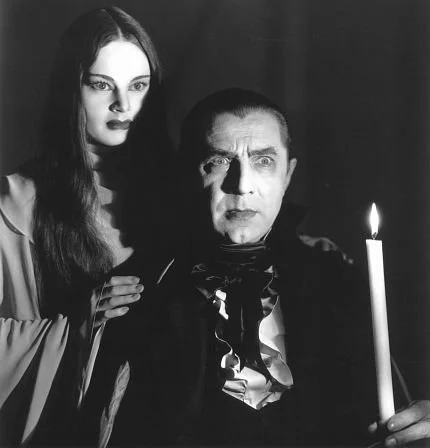
Principle two states “The vampire is always more interesting than those who pursue it”. This holds true whether it’s vampires or not – evil is usually more interesting than good. Even when we cheer on the heroes, the antagonist can be more a more narratively interesting character. And in Mark of the Vampire, Lugosi and Borland are more fascinating – we see so little of them, and the scenes we do get are the most striking. It’s hard not to want to know more, and for the majority of the film it’s their characters you’re wanting to understand. And once the story unfolds and we start to understand more, it shifts to the actual killer’s motivation, the killer’s reasoning for doing what he did. And the man who murdered Sir Karell becomes the more fascinating character. Of course, we can’t discount our two ‘vampires’ either, and one of the last scenes of the film is theirs, packing up their items from their latest job, Lugosi cracking a joke to Borland – the first time we’ve heard him speak. So, with both the faux vampires and the real killer, yes, this film does adhere to this second principle.
The third is “The vampire always returns.” There are three corollaries to this – vampirism begins at home, the vampire always appears to come from someplace else, and the vampire is always in motion. In this film, we don’t get any explanation of where the count and his daughter come from – they are just there. However, they do seem to be newcomers, which is why suspicion falls on them, as the locals don’t know who they are. The death of Sir Karell takes place in his own home, and he is discovered slumped over his desk. The vampire’s first act, in a manner. Not only that, but the true killer very much has a place in this home, as Sir Karell’s good friend and the man who then takes in Irena. And at the end of the film, we see the ‘vampires’ departing for their next show, ever in motion. The story doesn’t end with a promise of the vampires returning, as such, but Bela Lugosi does give a nod to his own typecasting, announcing he is thinking of creating a vampire act. The vampire lives, even when after the real killer is found and arrested.
So, ultimately, is Mark of the Vampire a vampire film? Can it be, with no real vampires in sight? I think Mark of the Vampire comes at a time when the cinematic vampire was still establishing itself, yet it manages to slightly subvert the genre, picking up imagery and tropes from just a handful of previous films and using them to guide you one way, while planting the seeds of the twist. Because of that, I think it works as a vampire film – the faux vampires still play an important role, and either they or the killer fulfils at least the first three principles according to Weinstock. I find it fascinating that we’re coming across this subversion so early on, and in just three films we’ve come across three different takes on the vampire, while borrowing from the previous films.
It’ll be interesting to see the subversions evolve over time, and it’s definitely something to keep an eye on, especially when we start to enter more outright parody territory.
by Elle Turpitt
Twitter: @elleturpitt
Bluesky: @elleturpitt.bsky.social